Waiting for Hands
Waiting for Hands is a work-in-progress XR performance (co-created with Yesica Duarte and Hema Kumari) during Bodies-Machines-Publics residency at Khoj Studios in 2024.
Virtual Reality (VR) is often hailed as the “ultimate empathy machine,” framing disability as an experience to be simulated through such technologies—reducing disability to a spectacle of pity or inspiration. If that is the case, if empathy is the knife, we question: what ethical stance an XR performance can take to attune participants to a non-normative body schema while resisting spectacle? In better words, a knife that cuts itself.
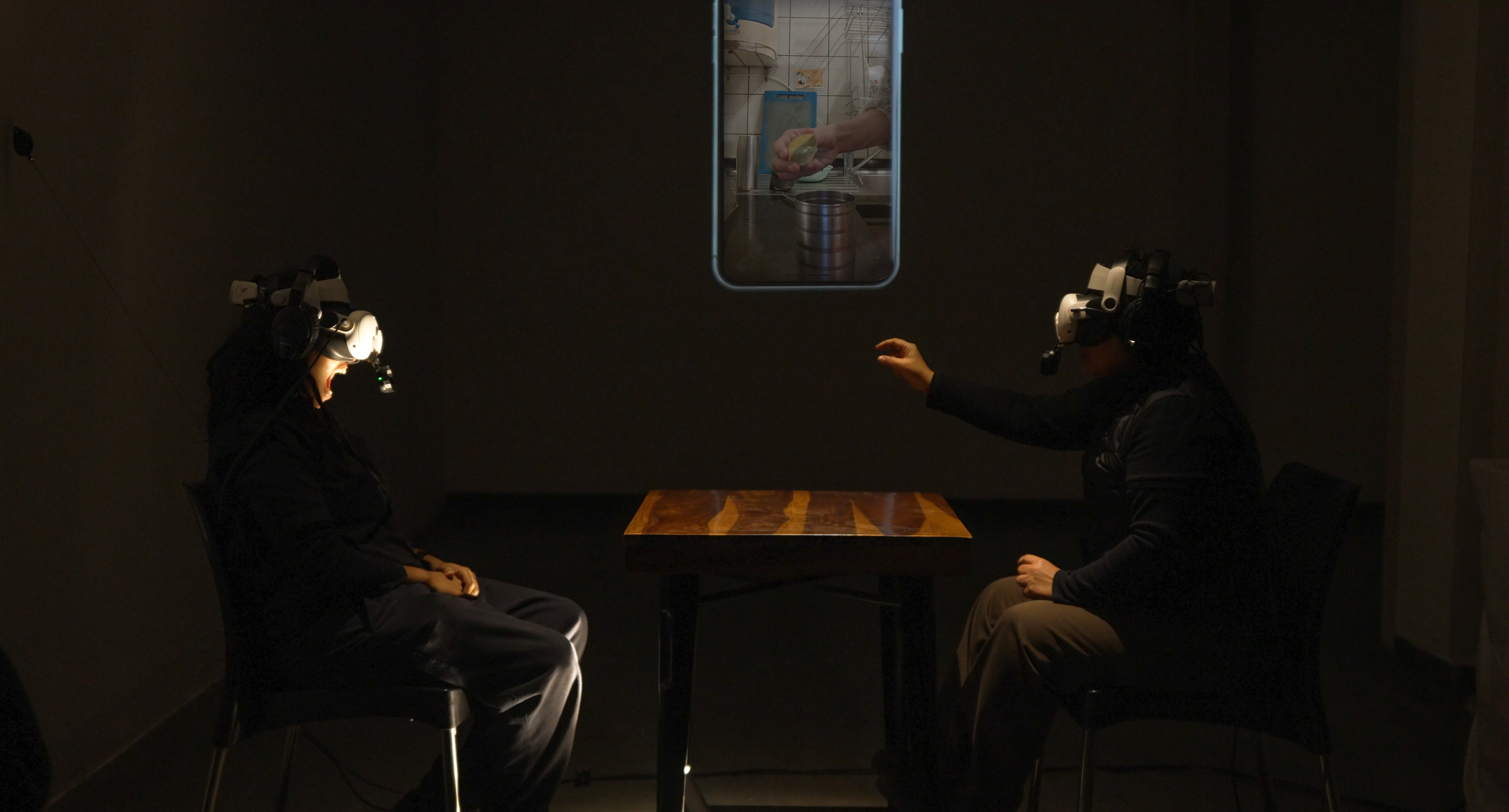
The XR performance involves eight persons: two XR participants on stage and six seated audience members who watch a projected documentary about Hema Kumari, an Indian singer living with Rheumatoid Arthritis. The XR users’ partially obscure the film, diverting audience attention through strange mouth and hand movements (instructed to perform in XR), creating a dual-layered experience that disrupts active viewership in Hema’s story and introduces uncertainty. While XR is considered as a hot medium—fully immersive and sensory-dominant—this piece subverts that rationale by repurposing XR to produce absurdity and alienation effect.
Context
The mouth is a key body part that Indian Singer, Hema Kumari relies on for her everyday activities when her hands and legs are in tremendous pain. That is, her arthritis compels her to find new affordances—what disability scholar Arseli Dokumaci calls ‘activist affordances’: “possibilities of action that are almost too remote and therefore unlikely to be perceived and yet are perceived and actualized through great ingenuity and effort to ensure survival” (2023).
These include Hema’s act of using her teeth (instead of hands) to pull blankets over herself during winters, unscrewing water bottle caps by gripping them between her teeth and squeezing lemons by pressing them in her mouth. These tasks inform Hema story about how hand movements encompass the possibility of pain, and how the situated intelligence of the body shifts toward the mouth—all the acts that motivated the framework for the XR performance. These include Hema’s act of using her teeth (instead of hands) to pull blankets over herself during winters, unscrewing water bottle caps by gripping them between her teeth and squeezing lemons by pressing them in her mouth. These tasks inform Hema story about how hand movements encompass the possibility of pain, and how the situated intelligence of the body shifts toward the mouth—all the acts that motivated the framework for the XR performance.

Performance Description
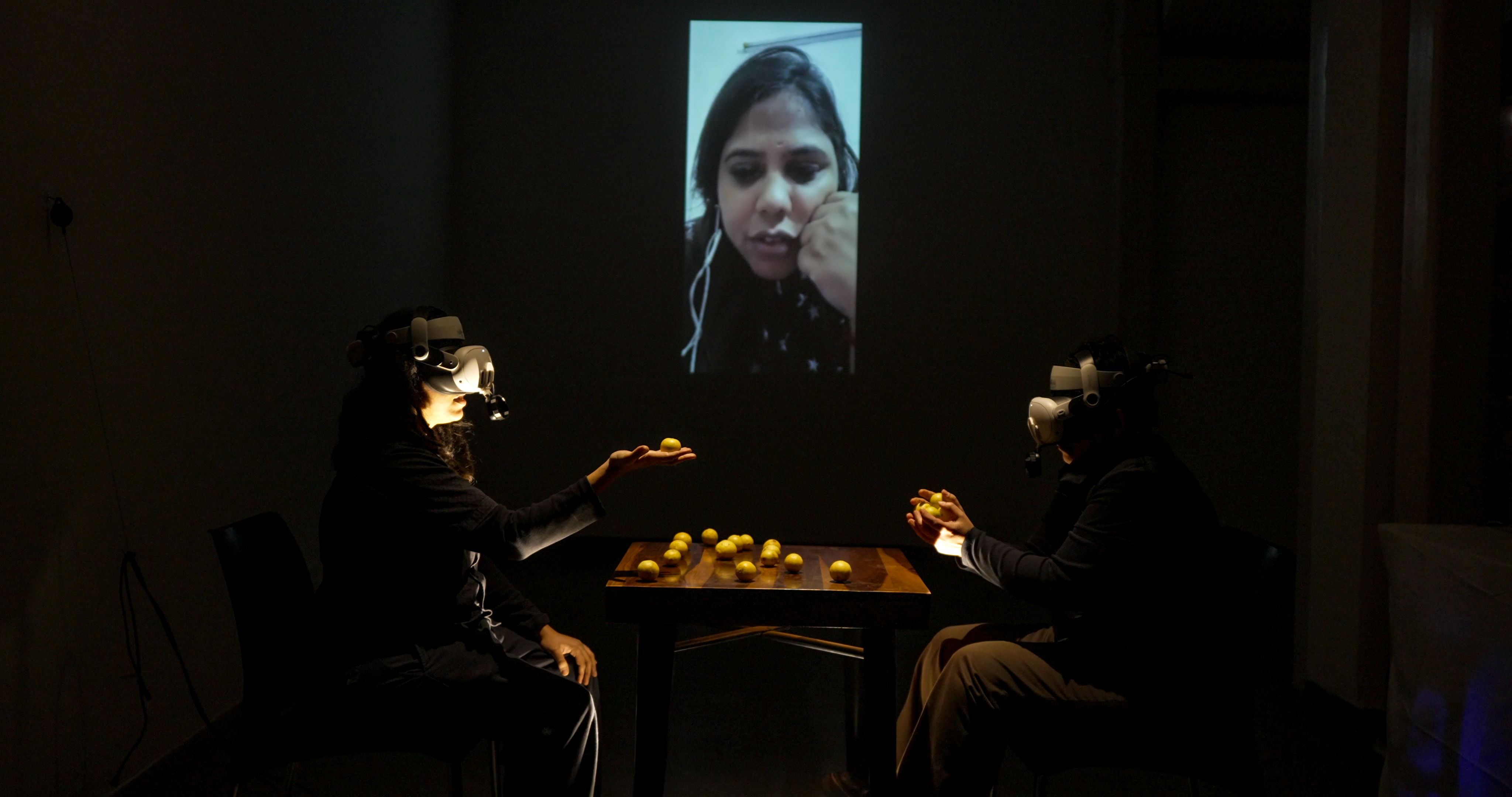
Exhibit as a work-in-progress, WfH is an 8-minute performance, an interactive experience for eight participants: six seated audience members in a default theatrical setup, while two members are invited onto the stage, each wearing a XR headset adapted with a mouth and face tracker. The experience differs for each group. The seated audience watches a video projection on a stage wall - entering the world of Hema, a disabled artist based in Delhi, India. Meanwhile, the two XR participants, seated between the projection and the audience, face each other across a table. Immersed in an XR experience, they interact using their hands and mouth—first separately, then collaboratively, and ultimately engage with the seated audience through physical objects.
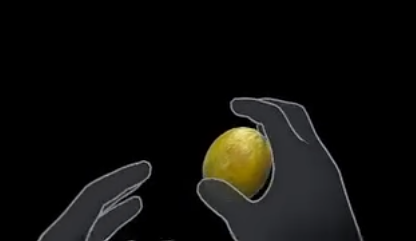
The performance is structured into two acts, separated by a two-minute interval. In Act One, the video introduces Hema’s life and artistic practice. The seated audience watches as her story unfolds, while the two XR participants experience a scene centered around lemons. Initially, XR participants use their hands to pick floating virtual lemons, but as the experience progresses, their interactions shift to mouth-based controls, navigating a surreal highway, surrounded by lemons. As the first half of the documentary ends, a plaque announces the interval, and the curtains close.
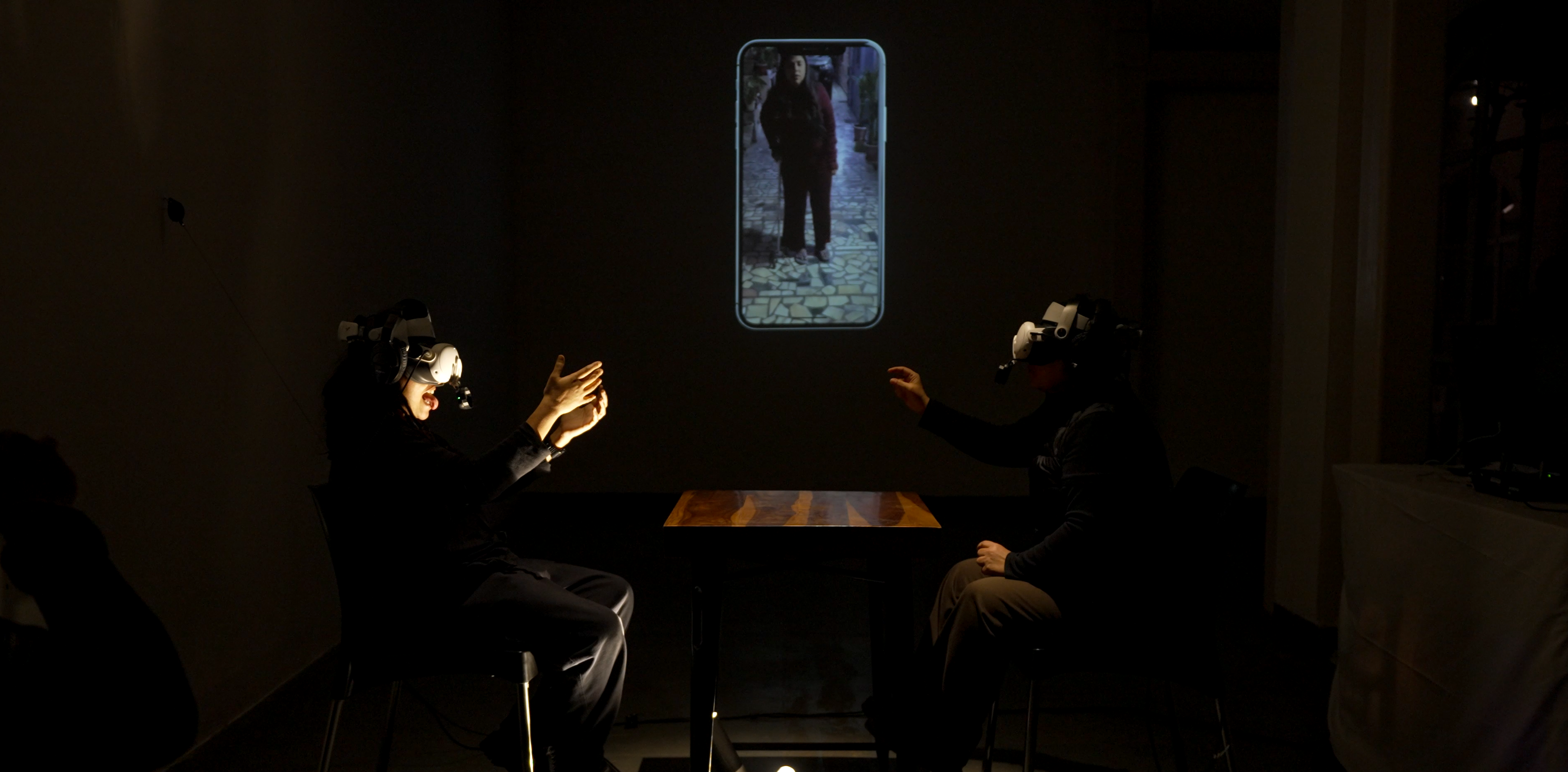
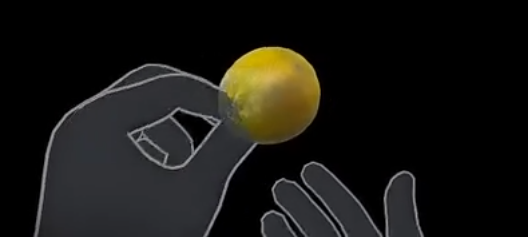
Act Two begins when the curtains reopen, revealing the table now covered with real lemons. Hema reappears on screen, directly addressing the seated audience about her disability. Inside XR, the participants’ interaction also shifts—this time, they pick up tangible, material lemons. The passthrough function (RBG cameras in the XR devices allowing users to see the material world through it) activates mixed reality, allowing them to see each other. Following a series of guided instructions, XR participants engage with the lemons in unexpected ways, eventually extending their actions to the seated audience. As the seated audience members interact with XR participants, Hema appears on the screen singing a Bollywood folk song and the performance reaches its conclusion.